
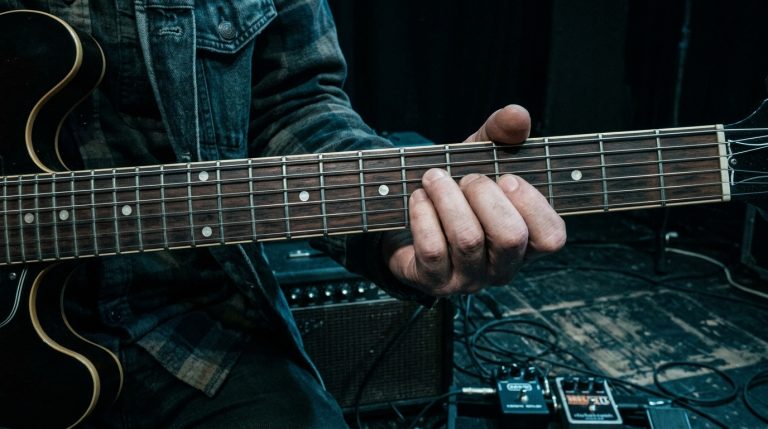
Playing a muted single-note line in the right place can transform a guitar part from background texture into a rhythmic engine. Rock guitarists often default to power chords or full strums. However, in R&B, the guitar frequently works like a percussion instrument, cutting through the mix with short, punchy figures. That approach is one of the five core skills covered in our complete R&B roadmap for rock players.
This article zeroes in on one specific tool: palm-muted, single-note treble figures woven into a 16th-note groove. Master this, and your guitar part will drive the song forward even in a dense, full-band arrangement.
Why Chord Strums Alone Can Disappear in a Full Band Mix
A rhythm guitar part can vanish fast when the bass, keys, and drums all lock together. Full chord strums share frequency space with almost every other instrument. As a result, individual notes blur into a wash, and the rhythmic detail gets lost.
This is especially true in R&B production. The drums are already dense with 16th-note hi-hat patterns. The keyboards often pad out the midrange. Therefore, a strummed guitar chord can feel redundant rather than essential.
The fix is not to play louder. Instead, shift your approach. A single-note figure occupies a narrow frequency band. It has a sharp, defined attack. Consequently, it cuts through a mix the way a chord strum simply cannot.
The Single-Note Treble Trick That Cuts Through Everything
Here is the core idea. Pick one note on the B or high-E string and hit it repeatedly with a palm mute. Keep the mute tight against the bridge saddles for a short, percussive attack.
A muted treble-string single-note produces what engineers sometimes call a “ticky” sound. It is bright, short, and rhythmically precise. In contrast, a muted bass-string note tends to sound thick and muddy in a dense arrangement.
The treble string note pokes through the mix because it lives above the frequency range of the bass and keys. Furthermore, the muted attack mimics a hi-hat or a shaker. It genuinely adds a percussion layer rather than just doubling an existing one.
Start on the 5th fret of the B string. Lay your palm lightly across the saddles. Then pick that note in straight 16th notes for one bar. You will immediately hear how it functions more like a drum sound than a guitar note.
Learn guitar with Dave Isaacs at ArtistWorks – Try a FREE 7 day trial!Start →
How the Fret Hand Connects to Your Chord Technique
Here is something that surprises most rock players: the fret-hand motion for single-note muted figures is nearly identical to chord strumming. When you strum a chord pattern, you release fret-hand pressure slightly between beats to deaden the strings. That release is what creates rhythmic definition.
Apply the same release on your single-note figure. Fret the note firmly on the attack, then relax your fret hand just enough to mute it short. Do not lift your finger completely off the string. Instead, reduce pressure so the note chokes on its own.
This keeps your hands working in sync. Additionally, it means you are not learning a brand-new physical skill. You are extending a technique you already own from your chord work.
For a deeper look at how 16th-note strum patterns build the rhythmic foundation beneath these figures, check out this guide to playing 16th-note grooves without losing the feel. The two approaches fit together naturally once both are in your hands.
Combining Ringing Chords and Muted Single-Note Figures in One Bar
The real power of this technique comes from contrast. A ringing chord strum followed by a muted single-note figure creates tension and release within a single bar. Each element makes the other sound better.
Try this specific pattern. Play a full strum on beat one. Let it ring briefly. Then fill beats two and three with a tight single-note treble figure in 16th notes. Finally, return to a chord on beat four.
The contrast between open and muted sounds gives the listener two distinct textures. Moreover, it gives the groove a push-pull feeling that purely strummed parts rarely achieve. This is the rhythmic vocabulary you hear behind classic R&B tracks.
Because this technique sits at the intersection of chording and lead playing, it also sets up naturally for more melodic work. For example, the parallel thirds and sixths that add melody to R&B lines (covered in this guide to playing thirds and sixths for R&B melodies) often launch from exactly this kind of single-note rhythmic foundation.
Check out the Session Players Toolkit with Dave Isaacs at ArtistWorksStart →
Building the Single-Note Pattern into a Real Groove
Practice this in small sections. First, isolate the muted single-note figure for four bars straight. Focus on consistency: every note the same length, the same attack, the same volume.
Next, add the chord strums back in. Alternate one bar of pure chord strumming with one bar of muted single-note figures. Listen for how they contrast.
Then, mix them within the same bar using the one-and-three chord, two-and-four figure approach described above. Record yourself. Even a phone recording will reveal whether the two elements are balancing or one is overpowering the other.
This approach also connects naturally to seventh chord voicings for R&B guitar, since the chord side of the pattern becomes more colorful once you swap in a dominant 7th or a 9th. Similarly, syncopated hybrid picking in the Marvin Gaye style builds on the same rhythmic precision this technique develops.
Putting It Together and Moving Forward
Single-note muted treble figures are a small technique with a large impact. They solve a real problem: how to stay present in a full-band mix without overplaying. They add percussion without a percussionist. They create contrast that makes every chord strum hit harder.
Start with one string, one note, one fret. Keep the mute tight. Release fret-hand pressure cleanly. Then add the chord strum back in and listen to what happens.
As you build this skill, keep returning to the full R&B guitar guide for rock players for context. Each technique connects to the others, and muted single-note work sits right at the center of the R&B rhythm guitar approach.
Learn guitar and get personalized coaching from Dave Isaacs at ArtistWorks!Start →
Featured Contributor
A Nashville guitarist, songwriter, and veteran music educator, he’s known for teaching musicianship, confidence, and practical guitar skills. He performs across rock, blues, country, jazz, and folk styles, and is a Manhattan School of Music graduate and former university music instructor.
ⓘWhere AI Assists, and Where the Team Decides
We use AI tools to help with research synthesis and first-draft generation, guided by team-written outlines and our editorial standards. Every article is then reviewed, fact-checked, edited, and approved by a member of our education team before publication. AI does not make publication decisions, and no article publishes under a TrueFire byline without team sign-off. We disclose AI use on every article that uses it — here at the bottom of the blog, where you can see it, not buried in a policy page.