
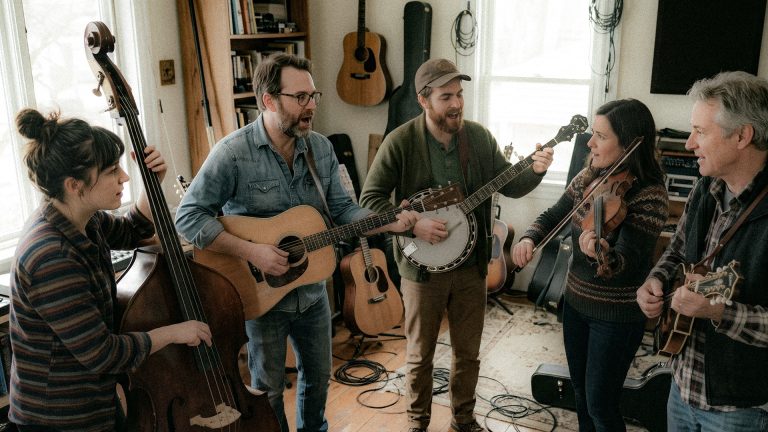
A bluegrass band works like a great conversation. Someone makes a statement, someone else responds, and the whole group leans in to listen. The best improvisers in bluegrass are not the loudest voices in the room. Instead, they are the players who lift every other voice when their turn comes and make space when it doesn’t. That insight changes how you practice, how you listen, and how you play.
This guide gives you the full picture. First, we’ll frame what bluegrass improvisation actually is at the structural level. Then we’ll walk through each of the five core instruments, covering the specific role each one plays in the ensemble conversation. Finally, we’ll hand you off to five deep-dive guides, one for every instrument. Whether you’re a guitarist who wants to understand why the banjo player chops differently on your break, or a fiddler trying to decode the bass player’s choices, this is your map.
What Bluegrass Improvisation Actually Is: Structure Before Flash
A bluegrass band does not improvise the way a jazz combo does. There are no open-ended chord changes drifting for twenty minutes. Instead, the structure is clear and shared. The song repeats its form, typically an A part and a B part, and each player takes a “break,” which means one full pass through the melody as a solo. Everyone else supports. Then the next player steps up. The form is tight, but within it, each player has real freedom.
Because the form is agreed upon, the improvisation lives in the details. A guitarist might play the same melody slightly differently each night. A fiddler might add a crying slide on a repeated section. A banjo player might lean harder on a particular roll to match the energy of the room. The structure creates the conversation, and the improvisation is how each player responds to what they just heard.
This matters for practice, too. If you only woodshed your own breaks in isolation, you are preparing for a solo performance, not a band. The real skill in a bluegrass band is listening across the ensemble in real time and adjusting. More on that in a moment.
Learn with Missy Raines, Sierra Hull, and Alison Brown at ArtistWorksStart →
The Two Jobs Every Bluegrass Band Player Rotates Through All Night
Every single player in a bluegrass band holds two roles. First, they take a break. Second, they back up everyone else’s break. Most beginners focus almost entirely on the first job. However, seasoned players will tell you that the second job is where reputation is built.
Mastering the full rhythm-and-solo cycle is the foundation of every instrument’s contribution. When you are not soloing, your job is to support the person who is. That means playing with restraint, keeping your volume in check. Responding to what the soloist is doing rather than playing your own pre-planned part. In short, backing up well requires the same ears as soloing well.
The best players in a bluegrass band are identifiable even when they are not soloing. Their rhythm playing has personality. Their dynamics shift when the soloist pushes. They leave space instead of filling it. Above all, they listen first and play second. Build that habit early, and your whole approach to the instrument will change.
Guitar in the Bluegrass Band: Engine and Melodic Voice
The guitar holds a unique position. On one hand, it drives the rhythm. On the other, it steps forward to deliver single-note breaks that are fluid and melody-focused. This dual identity shapes everything about how a guitarist approaches a session.
When a guitarist takes a break, the goal is not speed for its own sake. Instead, the break should trace the song’s melody clearly enough that a listener could sing along. Flatpicking technique makes this possible. A clean, confident pick attack produces single notes that cut through the band without any extra volume. The rhythm guitar drops back, and the melody floats out front.
For a detailed breakdown of how flatpicking technique connects rhythm playing to melodic solos, the guitar deep-dive covers it fully. That guide walks through how to think melody-first when you step into a break, so your guitar contribution serves the song rather than just showcasing your chops.
Banjo in the Bluegrass Band: Finding the Melody Inside the Roll
The three-finger roll is the defining sound of bluegrass banjo. It creates a challenge that is unique to the instrument. The roll produces a near-constant stream of notes. Because of that, a melody can get buried inside the motion if the player isn’t careful. The great banjo players solve this by shaping dynamics and accent within the roll itself.
Think of the roll as a river. The melody is a boat on that river. Your job is to make the boat visible. You accent the melody notes slightly, let supporting notes sit quieter, and use rhythmic phrasing to give the break shape. The result is a break that grooves and sings at the same time.
If you play banjo and want to go deeper, the guide on building melodic shape inside the roll takes this concept apart note by note. It explains how to identify the melody, how to map it onto your roll patterns, and how to phrase so the band hears the song through your solo.
Learn with Bryan Sutton, Darol Anger, Mike Marshall, and Tony Trishka at ArtistWorksStart →
Fiddle in the Bluegrass Band: Phrasing a Break Like a Singer
The fiddle is the most vocal instrument in any bluegrass band. It bends, slides, and shapes notes the way a human voice does. Because of that, a fiddle break carries more expressive weight than almost any other instrument in the ensemble. The challenge is harnessing that expressiveness without turning every break into a showcase.
Fiddle improvisation in bluegrass is fundamentally about phrasing. A great fiddle break breathes. It has natural pauses, rhythmic pushes, and quiet spots that make the loud moments land harder. Bowing choices drive this. A shorter bow stroke produces a choppier phrase. A longer bow stroke produces a legato line that floats. Combining them gives a break shape and momentum.
The deep-dive on fiddling with a vocalist’s sense of phrasing goes into the mechanics of this in detail. That guide covers slides, ornaments, and bowing techniques that help you think like a singer rather than like a technician. Your break will feel more connected to the song, and the whole band will respond.
Mandolin in the Bluegrass Band: From Percussive Timekeeper to Melodic Lead
The mandolin chop is one of the most distinctive sounds in bluegrass. Short, percussive, and rhythmically precise, it locks in with the bass to create the band’s core pulse. In fact, a solid mandolin chop is often the difference between a band that grooves and one that just plays the right notes.
However, the mandolin does not stay in the rhythm role all night. When the mandolinist takes a break, the instrument pivots completely. Instead of chopping, the player produces single-note lines and double stops that carry the melody. This pivot is a skill in itself. The physical motion changes, the volume changes, and the musical intention changes.
For a full look at how to lock in the chop and then step into a lead break confidently, the mandolin guide handles both sides of the role in depth. It explains the mechanics of the chop, how to keep it light and rhythmic, and then how to shift your mindset when your break arrives.
Upright Bass in the Bluegrass Band: Improvising With Taste and Restraint
The upright bass is the foundation of a bluegrass band. Every other instrument floats on what the bassist is doing. Because of that responsibility, bass improvisation in bluegrass follows a different logic than on any other instrument. The goal is not to add more notes. Instead, the goal is to keep the groove so solid that everyone else plays better.
Bass improvisation in this context means choices about rhythm, movement, and subtle variation rather than flashy runs. A bassist might vary a walking line slightly between verses. They might add a single passing note that lifts a chord change. They might pulse harder on the downbeat to push the band through a big chorus. None of this calls attention to itself, and that is the point.
If you play bass in a bluegrass band, the guide on improvising tastefully without pulling focus from the soloist is essential reading. It makes the case that restraint is a skill and that the most musical thing a bassist can do is keep the ground steady while everything above it blossoms.
Learn with Michael Daves, Brittany Haas, and Noam Pikelny at ArtistWorksStart →
Continue Learning
Each instrument in a bluegrass band carries its own set of demands, and the best way to improve your ensemble playing is to go deep on your own role while staying curious about everyone else’s. Here are all five supporting guides in the order that makes the most sense for your practice journey:
- Flatpicking melody-first solos while holding down the rhythm
- Finding the melody inside the banjo roll
- Phrasing a fiddle break like a vocalist
- Mastering the mandolin chop and stepping into a lead break
- Improvising on upright bass with taste and restraint
Final Thought
Every great player in a bluegrass band has two things in common. They have big ears, meaning they listen actively to everyone around them. And they have restraint, meaning they know when not to play. The flashiest break in the world does not matter if you are stepping on the soloist’s moment or rushing the groove when you back up. The players who stand out in any bluegrass band are the ones who make the room sound better the whole way through, not just on their eight bars.
TrueFire has in-depth courses built around each of these instruments and the specific demands of playing in an ensemble. Whether you are building your first break or refining a role you have played for years, there is a direct path forward from here.
Start learning with ArtistWorksStart →
About the Education Team
Four music-industry veterans with decades of combined experience in music education, curation, and production at TrueFire and ArtistWorks. The TrueFire Studios Education Team plans and edits this content and works with our master-musician faculty to keep it accurate and genuinely useful.
ⓘWhere AI Assists, and Where the Team Decides
We use AI tools to help with research synthesis and first-draft generation, guided by team-written outlines and our editorial standards. Every article is then reviewed, fact-checked, edited, and approved by a member of our education team before publication. AI does not make publication decisions, and no article publishes under a TrueFire byline without team sign-off. We disclose AI use on every article that uses it — here at the bottom of the blog, where you can see it, not buried in a policy page.