
DI
Most guitarists never stop to think about how they approach new songs. They pick up the guitar before they’ve actually learned the song, and that’s where the struggle starts. You noodle through the first verse, stumble at the chorus, and spend the next hour reinforcing a version of the song that is half-wrong from the beginning. The frustration is real, but the cause is almost always the same: you skipped the preparation.
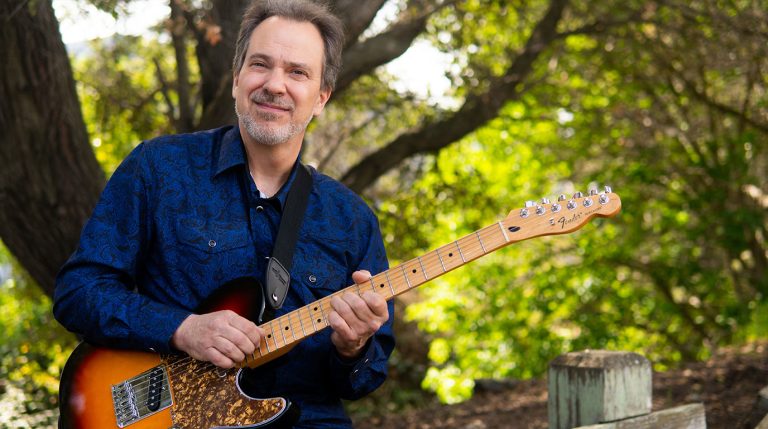
Dave Isaacs, Nashville-based guitarist and ArtistWorks educator, has a five-step process that fixes exactly this. The central idea is simple and a little counterintuitive: you do most of the real learning before the guitar ever leaves the case. By the time you play the first note, the song is already living in your head. That mental map is what separates a confident, musical performance from a note-chasing struggle session.
This article walks through all five steps at the concept level. Each step links out to a deeper post where the full method is unpacked. Read this first. Then pick one song and work through the process in order. By the end, you will understand not just how to approach new songs. Why this particular sequence works so well for players at any level.
Why Your Process Determines How Fast You Actually Learn
Most players think of song-learning as a physical task. You sit down, you figure out the chords, you run it until your fingers know where to go. However, that framing misses the most important part of what is actually happening when you learn a song.
When you learn a song without a process, your brain is managing too many things at once. You are reading a chart, interpreting notation, translating it to your fretboard, and coordinating both hands. As a result, your attention is fractured. Mistakes get baked in because you do not have the mental bandwidth to catch them in real time.
The five-step approach fixes this by separating the cognitive tasks. Each step handles one layer of the song. By the time you reach the guitar, your brain is free to focus on execution rather than decoding. That is the whole game. When you know a song so thoroughly that it plays in your head on its own, your hands follow the map instead of searching for it. Confidence becomes a byproduct of preparation.
Dave Isaacs’ Session Player Toolkit – Try 7 Days FREE!Start →
How to Approach New Songs Step 1: Conscious Listening Trains Your Ear Before Your Hands
The first step is the one most players skip entirely, and it is arguably the most important. Before you look at a chart or touch the guitar, you listen. Not casually, not as background music while you do something else. You listen on purpose.
Conscious listening means following the song’s structure in real time. Where does the verse end? Where does the chorus start? Is there a bridge? Does anything repeat? You are building a mental map of the song before you have to navigate it with your hands. This is exactly how professional musicians prepare for sessions and gigs.
Dave Isaacs calls this the foundation of the whole process. Your ear is the instrument you use before any physical instrument comes into play. Once your ear knows the song, everything downstream gets easier. For a structured approach to building this skill, the one-week listening challenge gives you a concrete practice framework built around exactly this idea.
Step 2: Follow Along with a Visual Resource Before You Play
Once you have listened actively to the song several times, you have an internal map. Step two is where you test that map. You pull up a chord chart or a tab and follow along while the song plays, still without touching the guitar.
This step does two things at once. First, it lets you verify your ear. If you heard a chord change in one spot and the chart shows something different, you now have a discrepancy worth investigating. Second, it forces you to evaluate the resource itself. Not all charts are accurate. Not all tabs are reliable. By checking a chart against what you actually hear, you develop the critical skill of knowing whether a resource is worth trusting.
This is a meaningful shift in how most players use charts. Instead of treating a chart as the authority, you treat it as one piece of evidence. The song you heard is the authority. Understanding how to approach new songs using a chart as a tool rather than a crutch is a concept worth spending real time on. The detailed breakdown of how to use a chord chart or tab before picking up the guitar covers this step thoroughly.
Get direct video feedback on your playing from Dave Isaacs at ArtistWorksStart →
Step 3: First Playthrough Means Slow, Accurate, and Intentional
When the guitar finally comes out, the goal is not speed. The goal is accuracy. You are programming information into muscle memory. That programming works best when the information is clean from the very first repetition.
Play the song at a pace slow enough that you can make every transition correctly. If a chord change is causing you to stumble, you are playing too fast. Slow it down until the stumble disappears, then stay there. This is not a warmup or a rough draft. This is the real work, and what you do here will stick.
The first playthrough is also when you identify problem areas. Not to fix them yet, but to flag them. Make a mental note, or even a written one, of every spot that feels uncertain. Those spots become the input for step four. The full picture of what to focus on the very first time you pick up a new song goes deeper on exactly how to structure this session so you get it right from the start.
Step 4: Targeted Research Solves What Slow Practice Cannot
Some spots in a song resist even careful, slow practice. You play it correctly once, then differently the next time. That inconsistency usually means the information is still ambiguous. You have not yet settled on the right version. Step four is where you go find it.
Targeted research is a focused, forensic search. You look for live performance videos and find covers from other guitarists. You check lessons, interviews, and any other source that might show you how the difficult passage actually works. The goal is not to find the first result that looks close enough. The goal is to find the version that resolves your specific uncertainty and then confirm it from more than one source.
This step requires discipline. It is easy to fall into a casual browsing loop and come out an hour later with five conflicting versions and more confusion than you started with. Instead, go in with a specific question. What is actually happening in that one transition? What voicing is being used in that chorus? A clear question produces a useful answer. For a full method on how to research and solve hard guitar song problems without wasting time, that post breaks down the whole approach.
Step 5: Memorization Becomes Strategy, Not Repetition
By the time you reach step five, you already know the song reasonably well. You have heard it deeply, followed it on paper, played it through carefully, and resolved the hard parts. Memorization at this stage is not a matter of grinding the song until it sticks. It is a matter of choosing your approach.
Different players memorize differently. Some respond to the lyrical content of a song and use the words to navigate the structure. Others rely on the chord sequence as a kind of logic map. Still others internalize the melody and let it pull them through. Knowing which of these works best for you is a genuine skill, and it develops with practice.
Dave Isaacs emphasizes setting a concrete goal for memorization. Do not just say you want to know the song. Decide what “knowing it” actually means for you in this context. Can you play it start to finish without stopping? Can you play it in front of someone? Are you still able to play it cold, days after your last practice session? Each of those is a different benchmark. The deeper post on how to memorize a song and get it performance-ready gives you the full framework for this final step.
Take your musicianship to the next level with Dave Isaacs’ Session Player ToolkitStart →
Why the Order of the Five Steps Actually Matters
You might be tempted to rearrange the steps. Maybe you want to listen and play at the same time, or skip the chart step because you usually learn by ear. However, the sequence is not arbitrary. Each step prepares the conditions that make the next step effective.
Listening first means your ear is already calibrated when you open a chart. Because you have checked the chart before playing, your first physical run-through is informed rather than exploratory. As a result, the problem spots you identify in step three are specific and actionable, which makes your research in step four efficient. Finally, because all four steps have built a layered understanding, your memorization in step five has real substance to work with. Skip a step, and you weaken every step that follows.
This is the core insight behind how to approach new songs the way working musicians do. It is not about practicing harder. It is about practicing in the right order. For context on why this structured approach consistently produces better results than intuitive methods, the deeper piece on why a deliberate song-learning process changes your playing is worth reading alongside this one.
What This Process Looks Like on a Real Song
Consider what this looks like in practice. You pick a song you want to learn. On day one, you listen to it three times, actively following the structure. Then on day two, you pull up a chart and follow along twice. Day three, you pick up the guitar and play it through slowly, flagging rough spots. On day four, you research those rough spots specifically. Then on day five, you play it again and begin working toward your memorization benchmark.
That is five days of work, and by day five you have a real relationship with the song. Compare that to the alternative: one long session of picking your way through unfamiliar territory, reinforcing whatever happens to come out of your hands.
The best way to approach new songs is not to practice harder. It requires more deliberate attention at the front end. However, it makes learning more efficient and far more durable. The time you invest in the early steps pays back in clean execution later.
Continue Learning
Work through the five steps on one song this week. Start with the listening challenge and move in order. Each of the posts below covers one step in full detail.
- Build your ear before you ever touch the guitar: the one-week listening challenge
- Why listening to a song before you try to play it is non-negotiable
- Using a chord chart or tab as a tool, not a crutch, while you learn
- What your very first practice session with a new song should actually look like
- How to research hard parts efficiently so you stop guessing
- Memorizing a song completely and getting it performance-ready
Final Thought
The five-step process Dave Isaacs lays out is not a shortcut. It is a discipline. However, the players who commit to it consistently report something that goes beyond faster learning: they report playing with more confidence, more musicality, and less frustration. That is because the process addresses the real problem, which is not that your fingers do not know what to do. That your mind is not yet clear on what to ask of them.
Start this week. Pick one song. Use the listening challenge as your first move. Then follow the steps in order and see what changes when you approach new songs as a musician who prepares, not just a guitarist who practices.
Learn guitar with Dave Isaacs at ArtistWorksStart →
About the Education Team
Four music-industry veterans with decades of combined experience in music education, curation, and production at TrueFire and ArtistWorks. The TrueFire Studios Education Team plans and edits this content and works with our master-musician faculty to keep it accurate and genuinely useful.
Featured Contributor
DI
A Nashville guitarist, songwriter, and veteran music educator, he’s known for teaching musicianship, confidence, and practical guitar skills. He performs across rock, blues, country, jazz, and folk styles, and is a Manhattan School of Music graduate and former university music instructor.