
Improvisation is one of those skills that sounds magical when someone else does it well and feels impossible when you try to do it yourself. You know you should be practicing, but what exactly? Just playing scales over a backing track? Noodling until something clicks? Learning licks and trying to string them together?
Every beginner eventually hits the same question: how can I practice improvisation in a way that actually produces progress? In this guide, we’ll walk through a practical, structured approach that works across every instrument and every style (and how ArtistWorks can help get you to that next level you’ve been dreaming of).
Table of Contents
- Why Improvisation Needs a Practice Routine
- How to Practice Improvisation: Start With the Melody
- Andy Hall on the Melody-Improvise-Melody Method
- An Improvisation Practice Routine You Can Use Every Day
- How to Get Better at Improvising: Habits That Actually Work
- Music Practice Tips That Accelerate Your Improvisation
- Deliberate Practice Improvisation: What Focused Repetition Means
- How to Build Improvisation Skills for the Long Haul
Why Improvisation Needs a Practice Routine
Most beginners approach improvisation the same way: they put on a backing track, pull out their instrument, and hope something interesting happens. Sometimes it does. Most of the time, though, the session ends in the same place it started, with the same handful of licks played the same handful of ways, and no real sense that anything new has been added to their playing.
Real improvisation growth requires a routine. The routine doesn’t have to be complicated, but it does have to be intentional. When you know what you’re working on, why you’re working on it, and how you’ll know when it’s improving, every practice session moves your playing forward instead of running in place. This article gives you that structure, along with the daily habits and long-term strategies that turn improvisation from a scary skill into a natural way of playing.
How to Practice Improvisation: Start With the Melody
Practicing improvisation starts with a piece of advice you’ll hear from almost every great teacher: know the melody before you try to embellish it. Andy Hall puts it directly: you should never be improvising over a song whose melody you can’t play. The melody is the reference point every improvised phrase relates back to. When you know it cold, your improvisation has a home to return to. When you don’t, everything you play tends to sound generic no matter how technically clean it is.
The practical version of this advice is the melody-first practice sequence:
- Learn the melody first. Sing it. Play it. Play it in different keys and positions. Get it under your fingers so completely that you’d recognize it anywhere.
- Alter the melody in small ways. Change one or two notes. Add a slide or a bend. Move a phrase up an octave. Small alterations are your first improvisation reps.
- Use the melody’s rhythm with different notes. Keep the rhythmic shape of the original melody and change the pitches. This is a powerful bridge between playing the melody and full-blown improvisation.
- Improvise over the form, then return to the melody. Take one chorus to improvise freely, then play the melody again as an anchor. Alternate. The melody-improvise-melody-improvise pattern gives your ear a home base while you explore.
Andy Hall on the Melody-Improvise-Melody Method
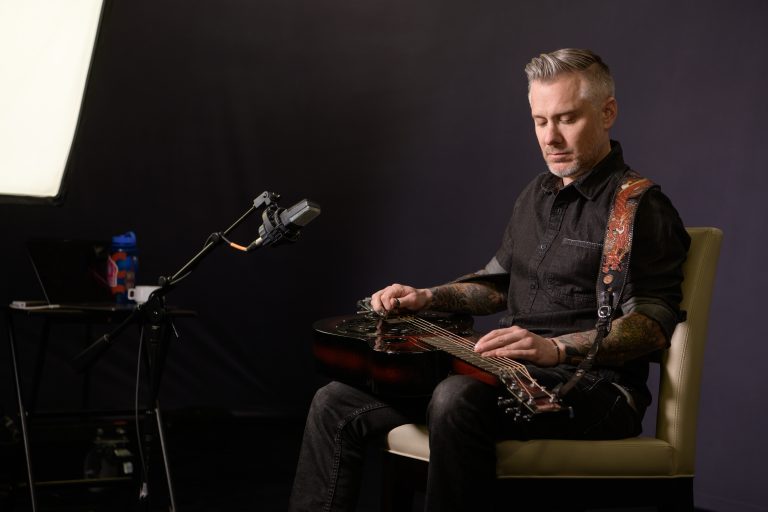
ArtistWorks resophonic guitar & lap steel instructor Andy Hall demonstrates the melody-first approach in the lesson above, using the classic bluegrass song “Wabash Cannonball” as the vehicle. He plays the melody through once, then improvises through once, then returns to the melody, then improvises again. The alternation is what makes the method work. Each melody statement grounds you back in the song. Each improvisation chorus gives you a chance to try something new.
Andy also shares a quote from the great jazz guitarist Charlie Christian, who when asked how he improvised, reportedly said he didn’t really know. He just knew a thousand melodies.
The takeaway for any beginner: the more melodies you learn, the more musical vocabulary you have to draw from when it’s your turn to solo. Repertoire is the deepest practice tool an improviser has.
An Improvisation Practice Routine You Can Use Every Day
An improvisation practice routine works best when it’s short, focused, and repeatable. A 30-minute daily session, structured like this, will produce real progress:
- 5 minutes: warm-up on your instrument. Scales, long tones, basic technique. Get your hands and ears awake.
- 5 minutes: learn or review a melody. Pick one song. Play the melody in the key it lives in. Sing it while you play. Focus on time and tone.
- 10 minutes: melody variations. Alter the melody in small ways. Change a few notes. Change the rhythm. Keep the shape recognizable while you experiment.
- 5 minutes: full improvisation over the form. Play through the song and improvise. Try to relate what you play back to the melody without literally repeating it.
- 5 minutes: reflect and record. Record the last chorus of your improvisation. Listen back once. Notice one thing that worked and one thing to refine tomorrow.
Doing this daily for three months will change your improvisation dramatically. The routine is deceptively simple, and the depth comes from consistency.
How to Get Better at Improvising: Habits That Actually Work
How to get better at improvising comes down to a handful of habits that compound over time:
- Practice with backing tracks in a loop. Andy mentions this technique explicitly. Loop a track and play over it until you find yourself trying new ideas. The repetition builds fluency.
- Know your fretboard, keyboard, or fingerboard. Whatever your instrument, understanding where notes live in multiple places on the instrument gives you options in real time. Beginners often lock into one position. Great improvisers move freely.
- Learn songs, not just scales. Songs teach you how melodies actually work. Scales teach you where notes live. You need both, and songs are more musical.
- Record yourself and listen back. Your ear will catch things your fingers missed. Consistent self-listening is one of the fastest paths to improvement.
- Play with other musicians as often as possible. Real-time musical conversation is a different skill from solo practice. Both matter.
Music Practice Tips That Accelerate Your Improvisation
Music practice tips that specifically accelerate improvisation focus on structure and reflection more than on new techniques. A few worth adopting:
- Set a clear intention before each session. “I’m going to work on melody-first improvisation over ‘Wabash Cannonball'” beats “I’m going to practice for an hour and see what happens” every time.
- Use a timer. Focused ten-minute blocks produce better results than unfocused hour-long sessions.
- Slow down. If you can’t play an idea cleanly at a slow tempo, you can’t play it musically at a fast tempo. Slow practice is where real improvement lives.
- End every session with reflection. Write down one thing you learned and one thing to work on tomorrow. The habit of reflection turns practice into progress.
- Practice in small daily doses. Improvisation skill accumulates through consistency more than through intensity.
Deliberate Practice Improvisation: What Focused Repetition Means
Deliberate practice is different from “just playing.” It targets a specific skill, works on it slowly and carefully, and pushes just past what’s currently comfortable.
An example of deliberate improvisation practice: take one melodic phrase you love from a song. Play it exactly as written. Now play it starting on a different note. Now play it in a different rhythm. Now play it descending instead of ascending. Now play it over a chord where it doesn’t quite fit and adjust the notes to make it work. That’s twenty minutes of deliberate practice on a single phrase, and it produces more improvisation growth than an hour of unfocused noodling.
The mental cost is real. Deliberate practice feels harder than freestyle playing because it demands attention. That difficulty is a feature. If it feels easy, you’re probably not building new skill.
How to Build Improvisation Skills for the Long Haul
How to build improvisation skills over a career, rather than over a weekend, comes down to a longer view of what you’re doing. Improvisation is a language you keep expanding for the rest of your musical life. The players who impress you most are still adding vocabulary, still transcribing melodies, still working on phrasing, still recording themselves to see what’s changed. That work never stops, and that’s part of what makes music such a rewarding lifelong pursuit.
For a deeper dive into the mindset side of confident improvisation, our companion blog post on how to improvise music confidently covers the mental habits that pair naturally with the practice techniques in this article.
Take Your Improvisation Practice to the Next Level
How to practice improvisation is one of those questions that seems abstract until you have a clear routine. Learn the melody. Alter the melody. Alternate between playing the melody and improvising over the form. Build repertoire. Record yourself. Reflect. Repeat daily. That’s the whole framework, and it’s enough to keep you growing as an improviser for as long as you want to keep playing music.
Start a free trial at ArtistWorks and learn with personal guidance. Submit videos of your playing, receive personalized feedback from world-class faculty across nearly every instrument, and build the improvisation practice habits that will carry you through every jam, session, and performance to come.