
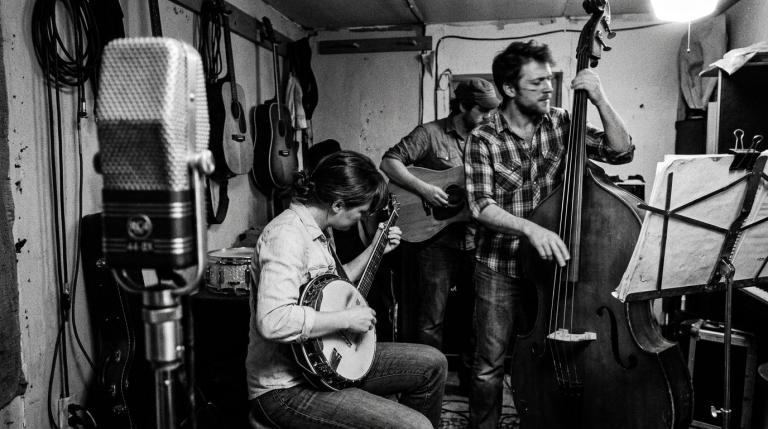
Bluegrass upright bass is the most underrated instrument in the genre. It is also the most misunderstood when it comes to improvisation. Most players assume the bass has no creative role until a solo break arrives. That assumption leads to stiff, mechanical playing that does the opposite of what a great bluegrass upright bass player does. The truth is that the bass improvises constantly. Every note choice, every walk, every subtle push on the beat is a decision. Done well, those decisions hold the band together and make everyone else sound better.
If you want to understand where the bass fits in the bigger picture of ensemble creativity, the guide to how a bluegrass band improvises together is the place to start. This article goes deeper on the bass specifically, covering the choices that matter and the ones you should almost never make.
Your Job as a Bluegrass Upright Bass Player
First, let’s set the foundation. Your job is feel and groove. Everything else follows from that.
In a bluegrass band, the bass is the harmonic anchor and the rhythmic spine. You are the lowest voice and the steadiest one. The band builds on top of you. When your pulse is solid and your note choices are clear, the other players relax. When your pulse drifts or your notes are muddy, everyone tightens up without knowing why.
So improvisation on the bass starts with a question: does this choice serve the feel and groove? If the answer is yes, play it. If the answer is no, hold back.
That is not a limitation. That is the craft.
Learn with IBMA Bass Player of the Year Missy Raines at ArtistWorksStart →
The Walking Pulse: Your Most Powerful Bluegrass Upright Bass Tool
The heartbeat of your playing is the steady two-beat pulse on beats one and three. However, calling it simple would be a mistake. The way you place those root notes, the amount of swing in your timing, the weight of your attack, these are all expressive choices.
A light, quick attack reads as bright and pushy. A deeper, rounder attack settles the groove and invites everyone to lean back slightly. Neither is wrong, but each creates a different feeling in the room. Great bass players choose intentionally.
In addition, dynamics matter enormously. Not every tune calls for the same volume or intensity. A slow gospel waltz needs a different feel than a hard-driving breakdown. Listen to what the fiddle and guitar are doing, and match the energy. Your pulse should feel inevitable, not mechanical.
Walk-Ups and Walk-Downs: Leading the Band’s Ear
Once your pulse is locked, the next layer of improvisation is the connecting walk. A walk-up or walk-down leads the listener’s ear from one chord to the next. For example, moving from G to C, you might walk G, A, B, C instead of jumping straight to the root. That simple move signals the transition clearly and gives the whole band a reference point.
However, timing is everything here. A walk that arrives late sounds like a mistake. A walk that arrives exactly on the downbeat sounds like intention. Practice your walks slowly, and place that final note right on the beat.
Because walks use passing tones and chromatic notes, they create momentary tension that resolves on the chord change. That tension is a form of expression. Use it deliberately, and vary your approaches so the band does not hear the same walk every time.
One more thing: not every chord change needs a walk. Sometimes the straight jump from root to root is exactly right. Overusing walks clutters the texture. Restraint, again, is the point.
Locking with the Mandolin Chop
The relationship between the bluegrass upright bass and the mandolin chop is the rhythmic core of any bluegrass band. The mandolin chops on beats two and four. You anchor beats one and three. Together, you create the full rhythmic framework that every other player solos over.
Therefore, your single most important ensemble skill is listening to the chop and locking with it. When the bass and mandolin are aligned, the rhythm feels almost physical. The band breathes together. When those two parts drift apart, even slightly, the whole groove becomes uneasy.
To tighten that lock, spend practice time playing along with a mandolin recording or a metronome on two and four. Feel where the chop lives in the beat and place your notes to complement it, not compete with it. For more on how the mandolin balances chop and lead duties, this look at the mandolin’s dual role in a bluegrass band is worth your time.
Tasteful Fills That Stay Under the Melody
Between the pulse and the walks, there is one more expressive space: the subtle fill. A fill might be a ghost note, a slight rhythmic anticipation, or a low flourish during a rest in the melody. However, fills must stay invisible. If anyone notices the fill, it was probably too much.
Think of fills as seasoning. A small amount changes the flavor of the whole dish. Too much, and that is all you can taste. Similarly, the best bass fills are felt rather than heard. They add momentum without drawing the ear away from the soloist.
This is where you connect most directly with the rest of the ensemble. For example, when the fiddle takes a breath between phrases, a subtle fill from the bass keeps the energy moving. Because the fiddle is carrying the melody and the emotional weight of the break, your job is to support that storytelling without interrupting it. For a deeper look at how the fiddle shapes a solo around the vocalist’s approach, this article on making a fiddle break sing shows exactly what you are supporting.
When the Bluegrass Upright Bass Takes a Solo Break
Occasionally, you will get a break. When that moment comes, keep it rhythmic and uncluttered. The worst bass solos try to do everything at once, with fast runs and wide leaps that lose the groove entirely.
Instead, think of your solo as a demonstration of everything you do behind everyone else. Play the chord tones clearly. Add one or two walk figures you have been using all night. Let the rhythm breathe. The goal is not to prove you can play fast. The goal is to show that the bass has a voice worth hearing for a moment before handing the spotlight back.
A rhythmic, confident bass break surprises the audience in a good way. It fits the song. It reinforces the groove rather than derailing it.
Foundation First, Every Single Time
Ultimately, bluegrass upright bass improvisation is a discipline of service. Every note you choose should ask: does this make the band sound better? Does this serve the feel? If yes, commit to it fully. If not, step back.
The full guide to bluegrass ensemble improvisation describes this instrument-by-instrument dynamic across the whole band. As you develop your bass voice, read that overview alongside this one. Understanding how the guitar’s flatpicking role and the banjo’s melodic rolls work above you will sharpen your instincts for what the bass should and should not do beneath them.
The best bass players are the ones everyone notices only when they leave the room. That is not invisibility. That is mastery.
Start learning with ArtistWorksStart →
About the Education Team
Four music-industry veterans with decades of combined experience in music education, curation, and production at TrueFire and ArtistWorks. The TrueFire Studios Education Team plans and edits this content and works with our master-musician faculty to keep it accurate and genuinely useful.
ⓘWhere AI Assists, and Where the Team Decides
We use AI tools to help with research synthesis and first-draft generation, guided by team-written outlines and our editorial standards. Every article is then reviewed, fact-checked, edited, and approved by a member of our education team before publication. AI does not make publication decisions, and no article publishes under a TrueFire byline without team sign-off. We disclose AI use on every article that uses it — here at the bottom of the blog, where you can see it, not buried in a policy page.