
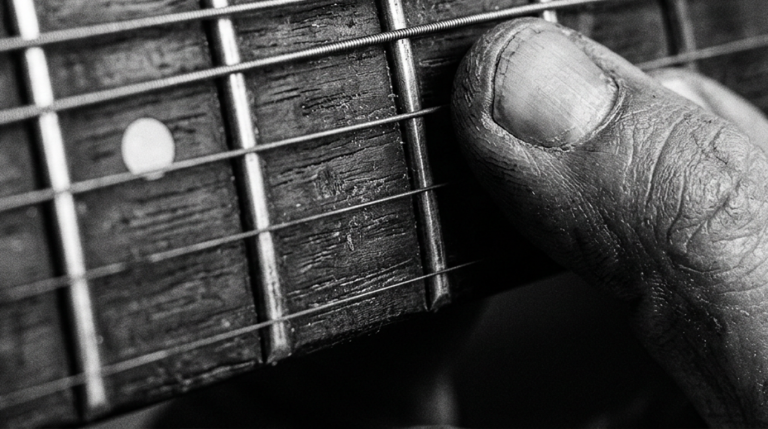
Playing a single note and repeating it might be the most underrated move in all of improvisation. Beginners often assume that good soloing means using lots of notes, clever scales, and fast runs. But that assumption is exactly what gets in the way early on. If you have ever noodled over a backing track and felt like nothing was landing, the problem probably was not your note choices. It was rhythm.
This article is about using one note, repeated in different rhythmic patterns, to dial into the pulse of the music underneath you. Before you ever worry about scales or licks, rhythm is what makes music feel alive. That is the core idea behind getting started with guitar improvisation, and this drill will prove it fast.
Why Beginners Lose the Feel by Playing Too Many Notes
Most new improvisers treat a solo like a race. They want to get from one end of the scale to the other. As a result, the notes pile up, the timing wavers, and the music underneath stops making sense.
Here is the real issue: when you are hunting for the next note, you stop listening to the track. You are thinking instead of feeling. Consequently, your playing drifts out of the pocket without you even noticing it.
The fix is radical simplicity. Instead of asking “what note comes next,” ask “what rhythm feels right on this note?” That single shift in focus puts you back in contact with the music.
The Single Note Drill: Starting with Whole Notes
First, pull up any slow-to-medium groove. A 12-bar blues backing track works perfectly. Then pick one note, say the root of whatever key the track is in, and forget every other note exists.
Play that single note as a whole note every four beats. Just one note per measure. Your only job is to place that note squarely on beat one and let it ring. Because the goal right now is pulse awareness, not expression.
This feels too simple. That is the point. If you cannot feel confident and relaxed playing one note per measure, you are not ready to add more notes yet. Stay here until the whole notes feel easy and unhurried.
Moving to Quarter Notes on a Single Note
Once whole notes feel comfortable, move to quarter notes. Play your chosen single note four times per measure, one on each beat.
Now something interesting happens. You start to notice the groove underneath more clearly. Because you are not chasing notes, you can hear the kick drum, the bass, the rhythm guitar. That is exactly where you want your attention.
In addition, try accenting different beats. Hit beat two a little harder. Then try beat four. Next, let beat one be soft and push beat three. Each accent creates a completely different feel against the same backing track. You are composing rhythm, not just counting.
Get coaching on your guitar playing and study directly with Dave Isaacs at ArtistWorksStart →
Syncopation: When the Single Note Gets Interesting
After quarter notes feel comfortable, start landing your single note in between the beats. Play it on the “and” of beat two. Hold it through beat three. Then rest for a beat and come back in on beat four.
This is syncopation, and it is what funk, R&B, and blues are built on. A single note repeated with syncopated rhythm is a completely valid musical statement. In fact, some of the most recognizable guitar parts in history are one note played with a distinctive rhythmic pattern.
Specifically, listen to how rhythm-focused players treat a single tone before they ever add a second note. They are not being lazy. They are locking in. So give yourself the same permission. There are no wrong rhythmic choices at this stage because the goal is feel, not pitch.
How Each Rhythmic Choice Creates a Different Mood
Here is something worth sitting with: the same single note can feel tense, relaxed, driving, or playful depending only on when you play it.
For example, playing a note right on the downbeat feels grounded and confident. Playing it just ahead of the beat feels urgent. Playing it a little behind the beat feels laid back and cool. Moreover, resting for a full measure before you play the note creates anticipation that a barrage of notes never could.
This is the rhythmic vocabulary most beginners skip entirely. They jump to melodic ideas extracted from scales before they have earned the rhythmic foundation those ideas need to land on. Rhythm is the platform. Without it, even great note choices fall flat.
Varying the Rhythm: An Open-Ended Practice Approach
Once you understand the basic principle, turn it into an open practice session. Set a timer for ten minutes. Choose one note. Then simply improvise with rhythm alone.
Try whole notes for a while, then quarter notes, then offbeats. Next, try playing in short bursts with gaps between them. After that, try cramming several short notes together in a cluster and then resting. Notice how the conversation with the track changes each time.
Because you have removed pitch from the equation entirely, your ear has nowhere else to go except toward time and feel. You will start to hear pockets in the groove you never noticed before. That is real musical awareness developing in real time.
This kind of single note rhythmic exploration also connects naturally to what you will discover when you study musical cells and how they work in improvisation. A rhythmic pattern on one note is basically a cell with all the pitch information stripped out. So you are already learning the architecture without realizing it.
Putting the Groove First in Every Solo You Play
After a few sessions with this drill, something shifts. You start every solo differently. Instead of reaching for the first scale shape, you listen for a moment first. You feel where the beat is. Then you find a rhythm before you find a note.
That order, rhythm first and then pitch, is what separates players who sound musical from players who sound like they are practicing scales. It applies whether you are playing blues, funk, jazz, or anything else.
This is also why the full beginner improvisation guide puts so much weight on groove awareness before technique. Technique serves the music. Rhythm is the music. Return to the single note drill whenever your solos start feeling scattered or overplayed. One note. One rhythm. Reconnect with the pocket, then build from there.
Learn guitar with Dave Isaacs at ArtistWorks!Start →
About the Education Team
Four music-industry veterans with decades of combined experience in music education, curation, and production at TrueFire and ArtistWorks. The TrueFire Studios Education Team plans and edits this content and works with our master-musician faculty to keep it accurate and genuinely useful.
Featured Contributor
A Nashville guitarist, songwriter, and veteran music educator, he’s known for teaching musicianship, confidence, and practical guitar skills. He performs across rock, blues, country, jazz, and folk styles, and is a Manhattan School of Music graduate and former university music instructor.
ⓘWhere AI Assists, and Where the Team Decides
We use AI tools to help with research synthesis and first-draft generation, guided by team-written outlines and our editorial standards. Every article is then reviewed, fact-checked, edited, and approved by a member of our education team before publication. AI does not make publication decisions, and no article publishes under a TrueFire byline without team sign-off. We disclose AI use on every article that uses it — here at the bottom of the blog, where you can see it, not buried in a policy page.