
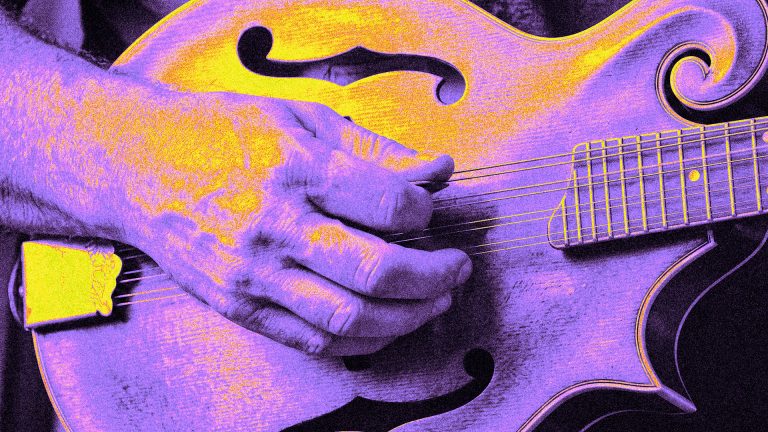
Bluegrass mandolin sits at one of the most fascinating intersections in American acoustic music. You are the band’s timekeeper and its melodic voice, often within the same eight-bar phrase. That dual role is what makes bluegrass mandolin so demanding and so rewarding. Most players find the chop early. However, learning to pivot cleanly from rhythm into a lead break and back again is where real growth happens.
This article focuses on exactly that journey. It also covers the techniques that make your breaks sing: tremolo for sustained melody, double stops for richness. Dynamic contrast for emotional shape. For the bigger picture of how every instrument fits together, start with the full guide to bluegrass ensemble improvisation, then come back here to dig into the details.
Why the Bluegrass Mandolin Chop Is the Band’s Snare Drum
First, understand what the chop actually does. It is a percussive, muted strum landing on beats two and four. In bluegrass, that is exactly where a snare drum would land if there were one. Because there is no drum kit, the chop fills that role completely. Without it, the band loses its rhythmic anchor.
The technique is specific. Fret a chord shape, but release pressure immediately after the strum so the strings mute. The result is a short, bright “chick” sound rather than a ringing chord. The attack comes mostly from the forearm and wrist, not just the pick. Many players new to bluegrass mandolin try to get this sound from pick angle alone, and the notes ring too long as a result.
Dynamics matter here too. When the band is pushing hard in a high-energy instrumental, your chop should sit in the pocket with real authority. However, during a quiet verse or a subtle fiddle break, you can lighten up considerably. Because the chop is percussion, you control the band’s feel more than you might realize.
Learn with Grammy-nominee Mike Marshall at ArtistWorksStart →
Rhythm Before Lead: Why Your Time-Keeping Matters Most
Before any solo, your bandmates need to feel the groove. In bluegrass, as in most acoustic music, a locked-in rhythm player is worth far more than a flashy soloist who rushes. Therefore, treat the chop as your primary instrument, not a warm-up activity.
A simple test: record yourself chopping through a whole song at a steady tempo with a metronome. Then listen back. Most players are surprised by how much their time wanders during transitions, especially when approaching a solo. For example, many players unintentionally rush the bar before their break starts. That tells every other player something is coming, and it disrupts the flow.
In contrast, the best bluegrass mandolin players stay invisible rhythmically right up to the first note of their break. The break appears out of nowhere, landing exactly on the beat. That consistency is a skill, and it takes deliberate practice.
Tremolo: How the Mandolin Sustains a Melodic Line
Unlike a fiddle or a voice, the mandolin’s notes decay quickly after they are struck. Tremolo solves this problem. It is a rapid alternating down-up strumming motion on a single note or course, creating the illusion of sustained sound. Because of that sustain, you can finally sing a long melodic phrase without chopping it into short rhythmic bursts.
Good tremolo feels effortless to the listener. In practice, it comes from a loose wrist and consistent pick depth. Start slowly and build speed gradually. Many players tighten up when they try to play tremolo fast, and that tightness kills the tone immediately. Instead, think of the pick bouncing lightly off the strings rather than digging through them.
Tremolo is especially useful when the melody sits on a single note for more than one beat. For instance, if a phrase hangs on the root of the chord, tremolo carries that note forward with warmth. The fiddle’s approach to sustaining melody and singing through a break shares interesting parallels here, so that article is worth reading alongside this one.
Bluegrass Mandolin: Double Stops and Crosspicking for Fuller Breaks
Single-note lines are clean and clear, but they can sometimes feel thin in the mix. Double stops, two notes played simultaneously, add harmonic richness without cluttering the texture. A third or sixth below the melody note is the most common choice. Choose intervals that fit the chord underneath, and the line will bloom.
Crosspicking is another way to fill space. It is a picking pattern that moves across three strings in a rolling sequence, similar to the banjo’s roll. As a result, crosspicking creates a flowing, continuous sound that bridges the gap between the choppy rhythm side of bluegrass mandolin and the lyrical melody side. It works especially well on medium-tempo tunes where straight single-note lines feel too sparse.
Both techniques reward slow practice. Therefore, isolate a two-bar phrase, add double stops or a crosspicking pattern, and repeat it until the left and right hands sync up naturally.
Learn with Mike Marshall and Andy Hall at ArtistWorksStart →
Dynamic Contrast: Staccato Versus Tremolo in Your Break
Great breaks have shape. They rise and fall, push forward and pull back. Dynamic contrast is how you create that shape on bluegrass mandolin. Staccato playing, short and clipped notes, creates urgency and rhythmic drive. Tremolo creates flow and emotion. Using both within a single break keeps the listener engaged.
Think of a break as a conversation. Some sentences are clipped and direct. Others are long and flowing. The contrast between them is what gives the passage meaning. In the same way, alternating between staccato runs and tremolo-held notes creates a musical sentence structure that feels natural and expressive.
Similarly, volume contrast matters. Drive hard into the peak of your break, then lay back on the return. That dynamic shape tells the band and the audience where you are in the musical arc.
Putting the Bluegrass Mandolin Pivot Together in a Real Break
The pivot from chop to lead and back is the defining technical challenge of bluegrass mandolin. Practically speaking, the last chop before your break should land with the same feel as every other chop. Then, on the downbeat of bar one, you are playing melody. The transition is abrupt by design, and that contrast is what makes it powerful.
Practice the pivot in isolation. Play four bars of chop, then four bars of lead, then return to chop. Do this slowly, then at tempo. Focus on landing the first melody note cleanly and the first return chop just as cleanly. Over time, the pivot becomes instinct.
For a broader view of how the mandolin’s role fits alongside every other instrument, revisit the player’s guide to bluegrass ensemble improvisation. You can also explore how the guitar handles the balance between rhythm and melody in a break, how the banjo finds melody inside its roll, and how the bass serves the band without stealing the spotlight. All of those roles connect directly to how you play your part as a bluegrass mandolin player.
Start learning with ArtistWorksStart →
About the Education Team
Four music-industry veterans with decades of combined experience in music education, curation, and production at TrueFire and ArtistWorks. The TrueFire Studios Education Team plans and edits this content and works with our master-musician faculty to keep it accurate and genuinely useful.
ⓘWhere AI Assists, and Where the Team Decides
We use AI tools to help with research synthesis and first-draft generation, guided by team-written outlines and our editorial standards. Every article is then reviewed, fact-checked, edited, and approved by a member of our education team before publication. AI does not make publication decisions, and no article publishes under a TrueFire byline without team sign-off. We disclose AI use on every article that uses it — here at the bottom of the blog, where you can see it, not buried in a policy page.