
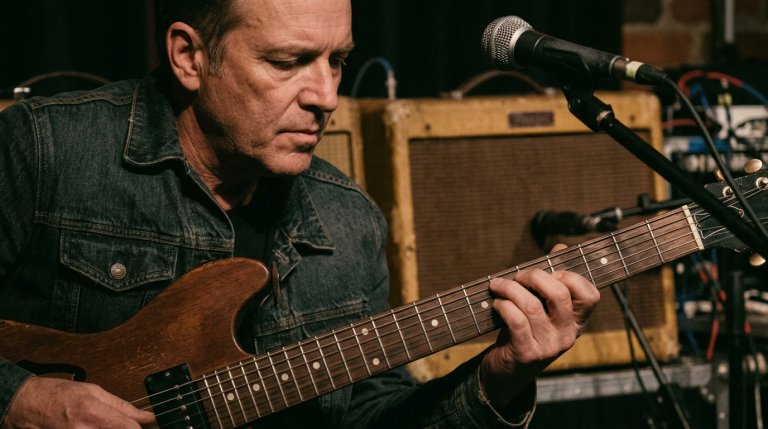
Blues turnarounds are the moment most players either nail the feel or accidentally telegraph that they haven’t quite locked the progression down yet. If you’ve been working through the super shuffle framework, you already know how much the hands control the sound. But the turnaround and the walking bassline are two places where specific, learnable details separate a smooth performance from a clunky one.
This article covers both, plus the gear side of the equation. Because the right setup doesn’t make you sound good on its own. However, it does remove the obstacles that fight you while you’re trying to. If you want the full picture of where these elements live in the shuffle, start with the framework overview before diving in here.
The Timing Trap Inside Blues Turnarounds
Most players start their turnaround lick on beat one of bar 11. That’s the mistake. Blues turnarounds actually begin on beat two of bar 11, which means you have one full beat of the I chord still ringing before the lick kicks in. Starting early compresses the lick and makes the whole end of the progression feel rushed.
Practice this first without any lick at all. Simply count through bars 11 and 12 out loud. Feel where beat two of bar 11 lands. Then, once that beat is internalized, add the turnaround on top of it. The timing is the foundation. The notes come second.
Blues Turnarounds: Three Options, One Progression
There are three versions of blues turnarounds to know, ranging from a full open-position blues lick down to a simple chord move. The full version uses a classic descending line in open position. The middle version simplifies that lick to its essential shape. The most stripped-down version is just a C9-to-B9 chord move that rides the rhythm you already have going.
All three are valid, in fact, choosing the right one for a given moment is part of playing musically. However, the version doesn’t matter if you haven’t practiced each one inside the full 12-bar progression. So isolation practice is how you learn the notes. But the groove lives in the context. Run the entire progression and let the turnaround happen at bar 11 every time. That’s how the timing becomes automatic.
Video Exchange with Keith – send him videos, get videos back with direct coachingStart →
Walking Basslines: Creating the Illusion of Two Players
The walking bassline technique is where the super shuffle really opens up. When you execute it well, listeners genuinely hear what sounds like a second rhythm guitar. The secret is simple in concept and demanding in practice. You isolate clean, sustained bass notes on the downbeats. Then you treat the open-string upbeats as near-silent percussion.
Those open-string upbeats aren’t meant to ring. They’re texture. They’re the “and” between the beats, handled with a light, almost muted touch. Meanwhile, the bass notes themselves need to sustain and speak clearly. The contrast between those two layers is what creates the two-instrument illusion.
Why Your Bassline Might Sound Clunky
Here’s the most common problem: the upbeats are too loud. If the open-string hits are anywhere near the same volume as the bass notes, the pattern collapses into a single-textured strum and the groove disappears. Most players discover this when they listen back to a recording and the pattern sounds muddy or busy.
The fix is to think of the upbeats as accents you’re actively suppressing, not notes you’re playing. For example, let your pick barely graze the string on the upbeat. In contrast, dig into the bass note with intention and let it ring. Practice that dynamic difference slowly.
Eventually, your right hand learns to shift weight automatically between the two beats. For more on how picking motion shapes the overall shuffle feel, check out the thumb-muting and picking breakdown.
Blues Turnarounds with Gear That Gets Out of Your Way
The right gear setup doesn’t replace technique. However, it does make the technique easier to hear clearly. For the super shuffle style, single-coil pickups are ideal. The clarity and brightness of a single-coil lets every bass note speak without blurring into the next one. If your guitar has humbuckers, try the middle position on a coil-split or use a blend that thins the sound slightly.
Your amp should be clean. No distortion, no heavy overdrive. Specifically, you want the amp set so that your picking attack controls the dynamics, not a gain stage. A touch of reverb is fine. Beyond that, keep the signal clear.
String gauge matters more than players expect. Lighter strings go sharp under an aggressive attack. Therefore, choose a gauge with enough resistance to handle the dig you’re putting into those bass notes. Many shuffle players land somewhere in the .011-.012 range for exactly this reason. The strings push back, which keeps the pitch stable and the tone focused.
Keith Wyatt teaches blues guitar lessons for all level of playersStart →
The Size of the Sound Still Comes From the Hands
Gear creates conditions. It doesn’t create music. Once your setup is clean and responsive, the actual size of the sound still comes entirely from your hands. That’s the throughline of everything in this cluster. If you want to understand how hand control shapes the overall blues tone before it ever touches an amp, the deep dive on that subject is worth reading on its own.
The walking bassline, the turnarounds, the gear choices: all of them serve the same goal. That goal is giving your hands the best possible environment to do the work. Practice the beat-two entry on your blues turnarounds until it’s instinct.
Work the dynamic contrast between bass notes and upbeats until the two-guitar illusion appears without effort. Set your amp clean, pick a string gauge that resists your attack, and let the single-coil clarify everything.
Then go back to the full super shuffle framework and hear how these pieces fit together. The sound you’ve been chasing is already in your hands. The right conditions just help it come out.
Learn Blues Guitar with Keith Wyatt at ArtistWorks!Start →
About the Education Team
Four music-industry veterans with decades of combined experience in music education, curation, and production at TrueFire and ArtistWorks. The TrueFire Studios Education Team plans and edits this content and works with our master-musician faculty to keep it accurate and genuinely useful.
Featured Contributor
A lifelong professional performer and educator in blues and classic American music traditions, Keith served as Director of the renowned Guitar Program at Musicians Institute, is the author of numerous books and videos, and has recorded and toured internationally for over 25 years with LA roots legends, The Blasters.