
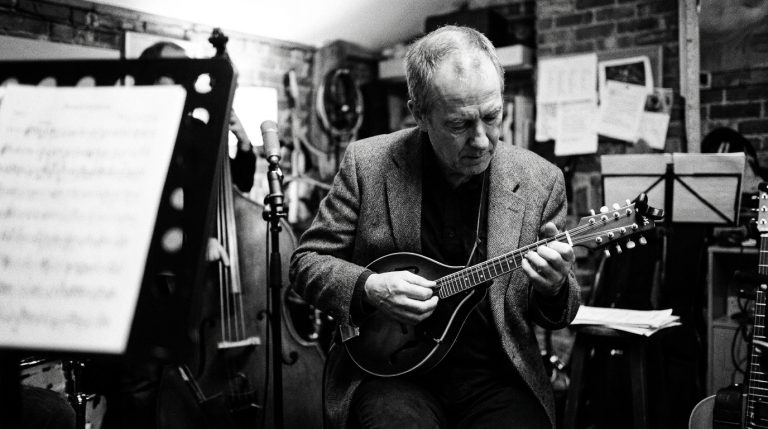
Beyond bluegrass, the mandolin found a second life that most players never expected. For decades, the instrument was synonymous with a single American tradition. Then a handful of adventurous musicians started asking harder questions. What happens when you run jazz harmony through a string band? How does a chord substitution sound on eight strings? What if the mandolin improvised the way a saxophone might? Naturally, the answers to those questions produced some of the most compelling acoustic music of the last fifty years. Of course, if you have ever heard a David Grisman record and felt something shift in your chest, you already know the feeling.
This article traces how the mandolin escaped its genre box, who made that escape happen, and how you can start exploring that expanded vocabulary yourself. For the full picture of the mandolin’s range across world traditions, start with our complete beginner’s guide to the mandolin and its many musical styles.
How One Genre Defined the Mandolin for Decades
The mandolin arrived in America with immigrant communities and quickly found a home in old-time and folk music. Then bluegrass happened. Bill Monroe’s ferocious playing set a template so powerful that it became the default definition of the instrument for most listeners. Learning how Monroe shaped that identity is genuinely useful context. It shows exactly what Grisman and his peers were pushing against.
By the late 1960s, ambitious mandolinists were running into a wall. The instrument carried enormous expressive potential. However, bluegrass conventions left little room for jazz harmony, extended chords, or free-ranging improvisation. But the genre’s rules were clear, and that clarity was part of its beauty. So for some players, it was also a constraint.
Beyond Bluegrass: David Grisman and the Birth of Dawg Music
David Grisman grew up loving both bluegrass and jazz. He studied Monroe’s playing deeply. At the same time, he absorbed Django Reinhardt, Charlie Parker, and the bebop vocabulary. Eventually, he stopped choosing between them. Instead, he built something new from both.
In the mid-1970s, Grisman formed the David Grisman Quintet. The lineup was revealing: two mandolins (David Grisman and Mike Marshall), guitar, bass, and violin. No banjo, no dobro. The arrangements leaned into jazz phrasing, syncopated swing feels, and harmonic movements borrowed straight from bebop. Grisman called the style “Dawg music,” a nickname that stuck because no existing label quite fit.
The records were the proof. Albums like “Hot Dawg” and “Quintet ’80” showed that the mandolin’s bright, articulate attack translated beautifully into jazz contexts. In fact, the instrument’s natural sustain limitations pushed players toward a horn-like, note-by-note melodic approach. In the end, that limitation became a strength.
Learn how to play mandolin with Mike Marshall at ArtistWorksStart →
What “New Acoustic” Actually Means
The term “New Acoustic music” appeared in the 1980s as a way to describe a broader movement Grisman helped start. It was never a strict genre definition. Rather, it described an attitude: serious acoustic players drawing on jazz, classical, and world music without abandoning the string band format.
Harmonically, New Acoustic music expanded the mandolin’s role considerably. Players began using major seventh chords, minor ninths, and diminished passing chords. Improvisation became central. Instead of trading breaks within a fixed structure, players moved through chord changes the way jazz soloists do. From there, the conversation between instruments became more complex and more free.
For example, Grisman’s collaborations with Tony Rice and Jerry Garcia pushed that openness even further. Each player brought a different background. As a result, the music never settled into a single template. That restlessness is part of what makes the New Acoustic tradition so alive today.
Beyond Bluegrass: Key Players Who Expanded the Sound
Grisman opened the door, but many players walked through it. Chris Thile is a visible example in contemporary music. His work with Nickel Creek, the Punch Brothers. His solo recordings has carried the beyond bluegrass conversation into the 21st century. Thile incorporates Bach, modern composition, and pop songwriting alongside jazz improvisation. The mandolin, in his hands, sounds like a complete orchestral voice.
Similarly, Mike Marshall explored the intersection of jazz and Brazilian choro on the mandolin. His collaborations with Darol Anger in the Turtle Island String Quartet showed how New Acoustic thinking could absorb influences from across the world. If you want to hear how deep that Brazilian connection runs, this look at the bandolim and Brazilian choro music gives you the full story.
Sam Bush came from a slightly different angle. His background in newgrass brought the mandolin into rock and funk territory, proving that the beyond bluegrass impulse was not just about jazz. The instrument was simply more flexible than anyone had given it credit for.
Get personalized video feedback on your playing from Mike Marshall at ArtistWorksStart →
The Mandolin’s Tone Is Actually Built for Jazz
Here is something players often miss. The mandolin’s physical characteristics make it a surprisingly natural jazz instrument. Its attack is fast and clear. Its sustain is relatively short. Those two qualities together push a player toward articulate, rhythmically precise single-note lines. That is exactly what bebop phrasing rewards.
In contrast, instruments with long sustain can blur through chord changes. The mandolin forces clarity. Every note lands individually. As a result, melodic lines have a transparency that suits jazz harmony beautifully. Django Reinhardt’s guitar work, which Grisman studied closely, operates on a similar logic.
Additionally, the mandolin’s tuning in fifths means that many jazz chord voicings are physically accessible. Minor sevenths and major ninths are comfortable shapes. The instrument does not fight you. Instead, it rewards a player who thinks harmonically rather than just linearly.
The classical mandolin tradition developed this harmonic richness from a different direction entirely, so it is worth exploring both paths if extended technique interests you.
Where to Start Your Beyond Bluegrass Journey
If you are new to this territory, start with your ears. Pull up the David Grisman Quintet’s self-titled debut or “Hot Dawg.” Listen for how the mandolin carries the melodic lead through jazz changes. Notice the swing feel in the rhythm playing. Hear how the ensemble breathes together the way a jazz combo does.
Next, learn one Grisman melody by ear. “Dawg’s Waltz” is approachable. “Opus 57” is more demanding but enormously rewarding. Transcribing even eight bars will show you how differently Grisman phrases compared to a bluegrass context.
Then start thinking about your chord vocabulary. Add major sevenths and minor ninths to your toolbox. Work them into slow jams. The harmonic expansion does not require abandoning what you already know. Instead, it builds on it.
For a full map of every direction the mandolin can take you, return to our complete guide to the mandolin’s many musical styles. The beyond bluegrass world is wide, and the mandolin is more than ready for it.
Learn any style of mandolin with Mike Marshall at ArtistWorksStart →
About the Education Team
Four music-industry veterans with decades of combined experience in music education, curation, and production at TrueFire and ArtistWorks. The TrueFire Studios Education Team plans and edits this content and works with our master-musician faculty to keep it accurate and genuinely useful.
Featured Contributor
Mike Marshall is a mandolin pioneer whose work spans bluegrass, classical, Brazilian choro, jazz, and progressive acoustic music. His broad mandolin curriculum includes lessons, performances, tab, backing tracks, and Video Exchange feedback.
ⓘWhere AI Assists, and Where the Team Decides
We use AI tools to help with research synthesis and first-draft generation, guided by team-written outlines and our editorial standards. Every article is then reviewed, fact-checked, edited, and approved by a member of our education team before publication. AI does not make publication decisions, and no article publishes under a TrueFire byline without team sign-off. We disclose AI use on every article that uses it — here at the bottom of the blog, where you can see it, not buried in a policy page.